A modern city communicates with its residents through dozens of disconnected channels — social posts, push notifications, paper flyers, indoor digital signage, and a patchwork of legacy outdoor signs. The result is fragmentation: residents miss critical information at the moment they need it most, departments duplicate work, and the public realm carries no consistent civic voice. A Smart City Communication System brings those channels together as one coordinated outdoor layer — operated by the city, available to every department, and present at the threshold of public space.
What a Smart City Communication System actually is
A Smart City Communication System is purpose-built communication infrastructure — outdoor digital displays, mounting hardware, networking, and a unified content platform — that operates as a city-owned asset rather than a third-party billboard network. It carries emergency alerts, civic announcements, wayfinding, transit and event information, and a managed advertising layer used to fund operations.
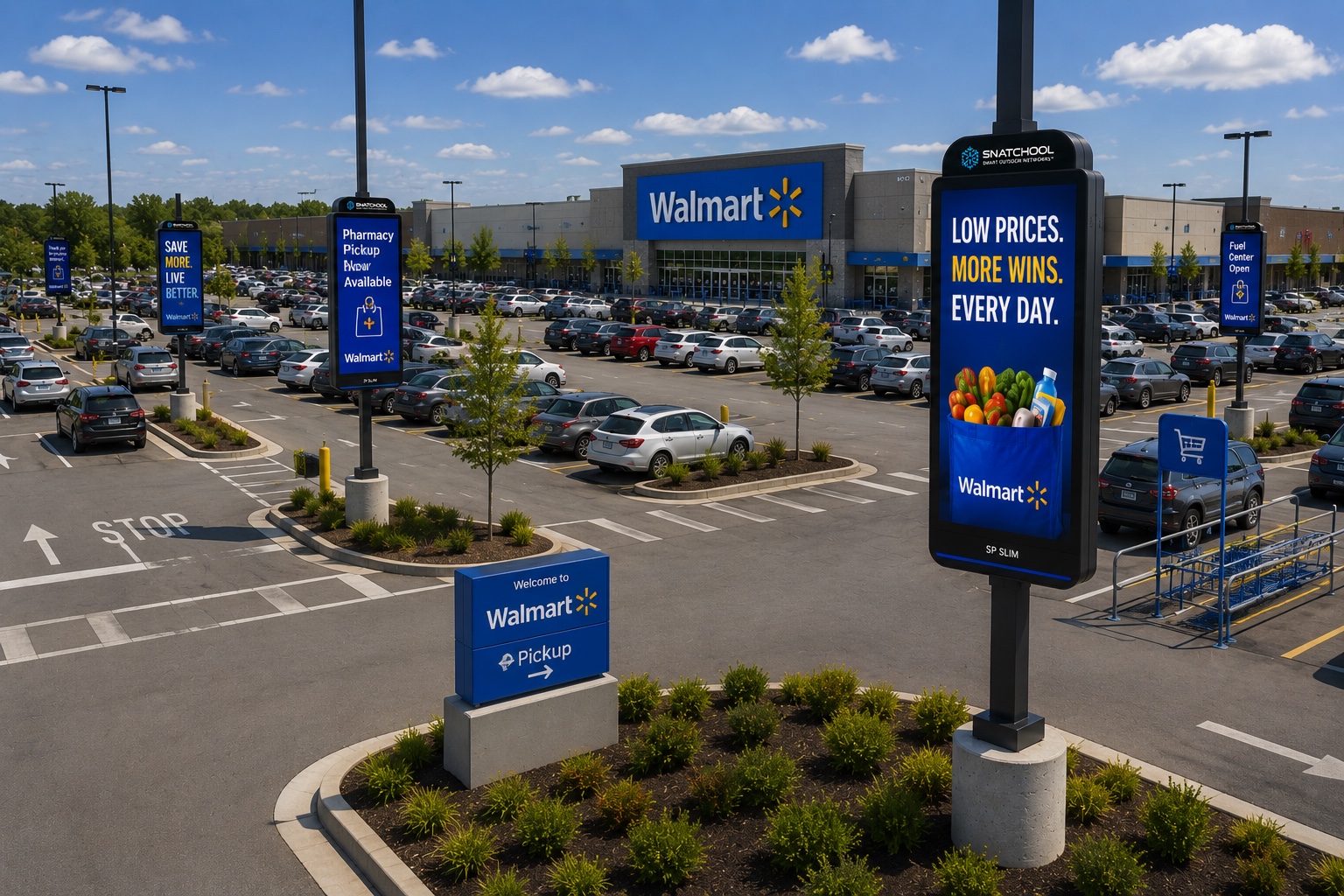
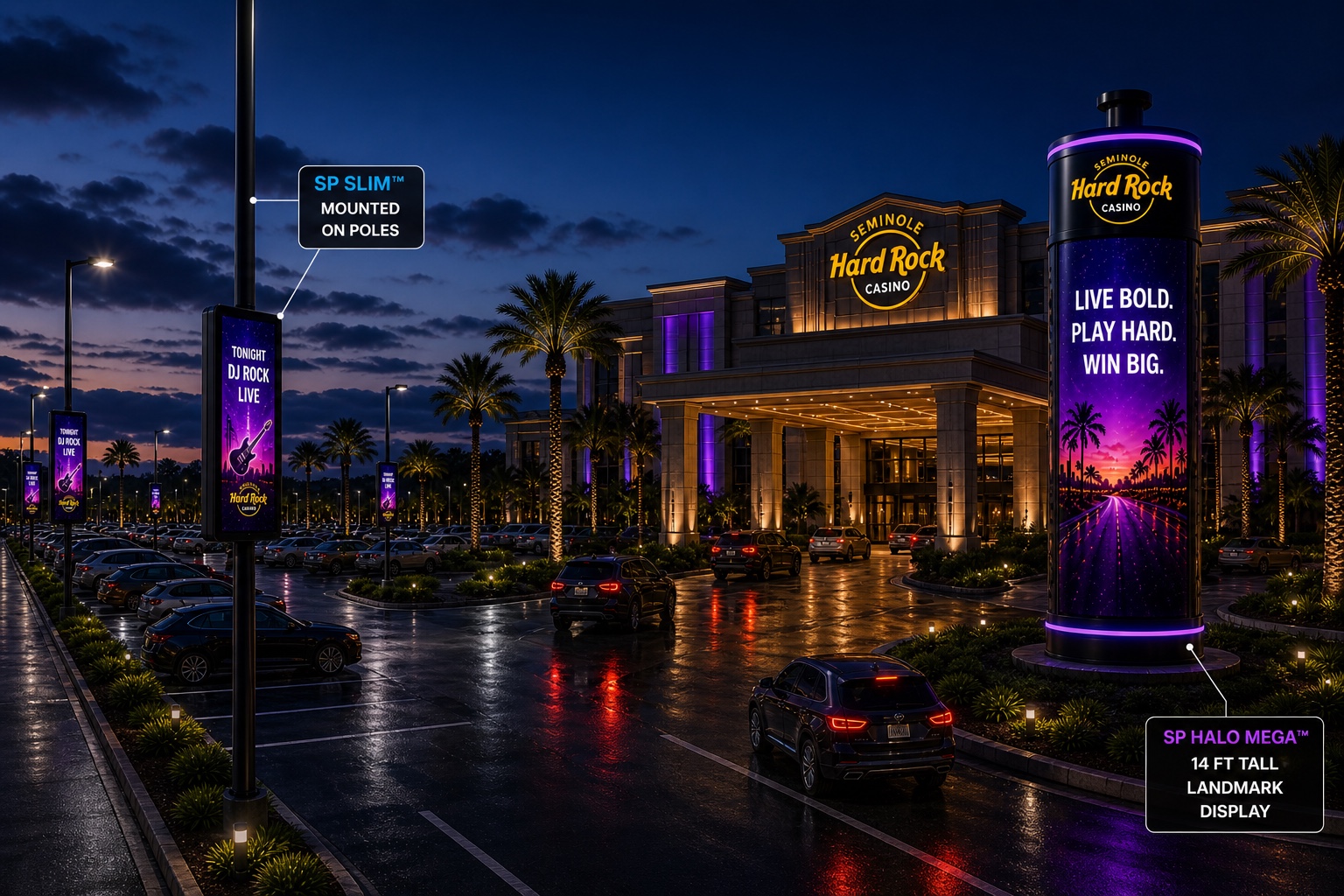
The Snatchool platform implements this model through two coordinated form factors. SP Slim™ pole-mounted displays deploy on existing municipal poles in pedestrian corridors, parking areas, and arrival points. Smart Palm™ landmark-scale structures add anchor locations — plazas, civic centers, transit hubs — that combine messaging, charging, and sensor hosting into one community asset.
Why outdoor infrastructure matters
App- and SMS-based notification systems reach residents who have opted in, who carry a charged device, and who happen to be looking at it. They miss exactly the people most exposed to a developing event — pedestrians, transit riders, families in parks, visitors who never installed the city app.
Outdoor infrastructure is the only channel that reaches the public realm reliably. A weather-rated, always-on display at street level operates the same way a stoplight does: it's visible to everyone in the environment, regardless of who they are or what device they carry. That's the foundation of First Contact Community Awareness™ — the operating principle that the first message belongs at the first point of contact.
The operating model: one platform, three layers
Snatchool's Municipal Digital Messaging™ framework organizes content into three coordinated layers on the same network. The public safety layer carries emergency alerts, severe weather notifications, and AMBER/Silver alerts with priority routing that overrides other inventory. The civic information layer carries department messaging — public works, parks, transit, special events, public health. The managed advertising layer carries brand-safe sponsorship inventory curated by the city, returning non-tax revenue without surrendering control of the public realm.
All three layers run on a single platform, on city-controlled hardware. There is no separate billboard contractor, no parallel safety-only system, and no department-by-department procurement of redundant displays. One asset, one operations workflow, multiple revenue and service outcomes.
Deployment in phases
Most cities begin with a pilot district — a downtown corridor, a transit station, or a high-visibility civic block. The pilot proves the operational workflow, integrates with the city's emergency management process, and produces visible community benefit before any citywide commitment.
From the pilot, the network expands along existing pole infrastructure: arterials, parking facilities, parks, beach and waterfront access, and neighborhood commercial districts. Smart Palm™ structures are reserved for anchor locations that warrant a landmark presence. The platform scales by adding units to the same operations workflow, not by replacing it.
Integration with city systems
A Smart City Communication System is only useful if it slots into the workflows departments already use. The Snatchool platform integrates with municipal emergency management systems, weather feeds, IPAWS, and event management workflows, so emergency managers and communications staff aren't asked to learn a new tool during an active incident.
Authorization is role-based: a verified public safety user can publish priority content that takes over the network in seconds, while routine civic content moves through standard editorial review. The platform produces a measurable record of what was published, when, and where it was delivered.
Funding without raising taxes
The most common objection to outdoor digital infrastructure is cost. Snatchool's model addresses that directly: the managed advertising layer is structured to fund deployment, operations, and ongoing service. Cities maintain editorial control over what runs on the network and on what standards, and the platform enforces those standards through templates and category restrictions.
The result is communication infrastructure that pays for itself while remaining a public asset. Cities don't trade ownership for capability — they keep both.
- A Smart City Communication System is owned by the city, not leased from a billboard operator.
- Outdoor infrastructure reaches the public realm; apps and SMS reach only opt-in device holders.
- Three coordinated layers — public safety, civic information, managed advertising — run on one platform.
- Deployment begins with a pilot district and scales along existing municipal pole infrastructure.
- The managed advertising layer funds operations without raising taxes or surrendering editorial control.
Frequently Asked Questions
It is coordinated outdoor communication infrastructure — pole-mounted digital displays, networking, and a unified content platform — operated by the city to carry public safety alerts, civic information, and a managed advertising layer that funds operations.
A billboard network is operated by a third party that controls the inventory, the content standards, and the revenue. A Smart City Communication System is operated by the city as a public asset; advertising is one managed layer alongside public safety and civic communication, not the purpose of the network.
Yes. SP Slim™ is engineered to mount on existing or new municipal pole infrastructure. Smart Palm™ is reserved for anchor locations such as plazas, civic centers, and transit hubs.
The platform integrates with municipal emergency management workflows and supports verified, role-based publishing so authorized public safety users can issue priority content that overrides other inventory across the network.
Yes. The Snatchool deployment model keeps the network as a city-owned communication asset. The city controls content, brand standards, and the managed advertising layer that returns non-tax revenue.
Bernard M. Albury Jr. is the founder of Snatchool Innovations LLC and the architect behind the SP Slim™ and Smart Palm™ outdoor communication platforms. He developed the First Contact Community Awareness™ operating principle that governs every Snatchool deployment and the Municipal Digital Messaging™ framework that coordinates public safety, civic information, and managed advertising into a single outdoor channel.