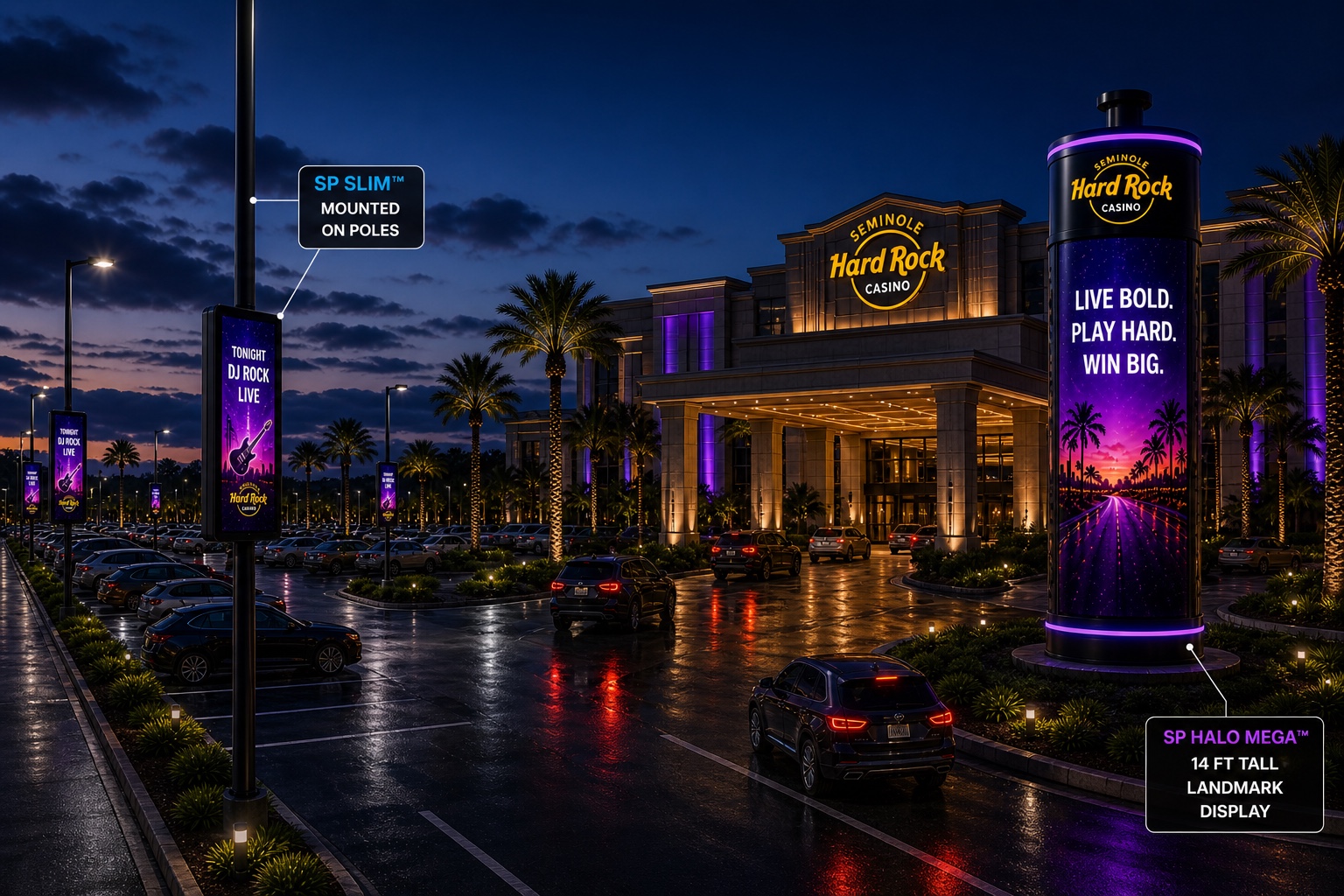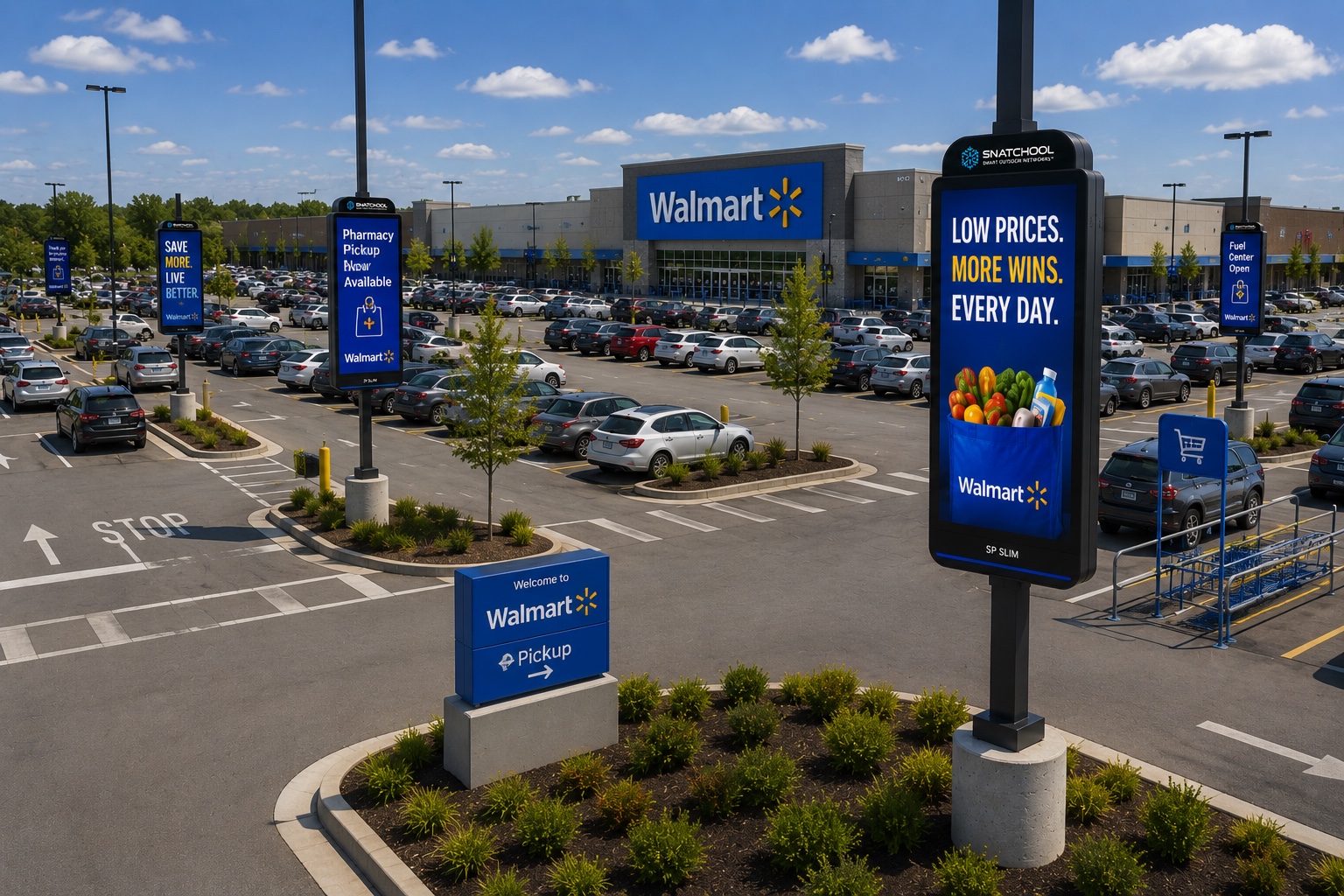
Most cities don't have a digital messaging problem — they have a coordination problem. Public works runs its own signs. Transit runs another set. Parks has flyers. Emergency management has an alert app. Tourism has a website. Each channel is fine in isolation; together they leave residents to assemble the picture themselves. Municipal Digital Messaging™ is a framework for fixing that, by putting every department on a single coordinated outdoor channel.
What Municipal Digital Messaging™ is
Municipal Digital Messaging™ is the operating framework Snatchool uses to coordinate every department's outdoor communication on one shared platform. Instead of each department procuring its own signs, the city operates a single outdoor network — built on SP Slim™ and Smart Palm™ — that every department publishes into through role-based access.
The framework defines three things: who can publish what (authorization), how content is prioritized when channels conflict (routing), and how the network performs against editorial and operational standards (governance). That structure is what makes the platform safe to share across departments.
Authorization: role-based publishing
Every account on the platform has a role. A public safety operator can issue priority alerts that interrupt other inventory. A communications staffer can schedule civic announcements. A transit dispatcher can post service alerts to relevant corridors. A parks team can promote a weekend event in the neighborhood it serves.
Authorization is enforced at the platform level, not by trust or convention. That means a city can give many departments publishing access without losing control of what appears on its public infrastructure.
Routing: priority is built in
When a severe weather warning is issued, no one should have to call the advertising contractor and ask them to clear inventory. The Snatchool platform enforces priority automatically: emergency content overrides civic content, civic content overrides managed advertising, and the override happens network-wide in seconds.
Routing also handles geographic scope. A localized water main break is published only to the affected service area. A citywide air quality alert appears on every unit in the network. The platform handles both without manual reconfiguration.
Governance: standards that hold across departments
Shared infrastructure only works when the standards are clear. The platform ships with templates that enforce typography, color, and message density appropriate to outdoor viewing. The managed advertising layer is bounded by category restrictions the city defines — no political, no adult, no categories that conflict with civic values.
Governance is operationally enforced, not just documented. The platform won't publish content that violates the templates, and audit logs show who published what, when, and where it ran.
What this replaces
Municipal Digital Messaging™ replaces three categories of legacy work. It replaces static signs that can't update during an incident. It replaces department-by-department procurement of small digital signs that never integrate. And it replaces the implicit assumption that a city's communication ends at its website and its social accounts.
What it does not replace is human judgment. The platform is operated by trained municipal staff using the workflows they already use; it gives them a coordinated channel instead of asking them to learn a new one.
- Municipal Digital Messaging™ unifies every department's outdoor communication on one platform.
- Role-based authorization lets many departments publish without losing central control.
- Priority routing automatically clears the network for emergency content.
- Templates and category restrictions enforce civic standards operationally.
- It replaces fragmented department-by-department signage and static legacy signs.
Frequently Asked Questions
Any department or role the city authorizes. Each role has defined permissions — public safety can issue priority alerts, communications can schedule civic content, transit can post service alerts to relevant corridors, and so on.
Routing is automatic. Emergency content has priority over civic content, which has priority over the managed advertising layer. Geographic scope is also handled at the platform level.
Yes. The managed advertising layer is bounded by category restrictions the city defines, enforced by the platform — not by trust in the contractor.
No. It is the outdoor layer that complements existing digital channels. Apps and websites reach people who opt in; outdoor messaging reaches everyone in the public realm.
Bernard M. Albury Jr. is the founder of Snatchool Innovations LLC and the architect behind the SP Slim™ and Smart Palm™ outdoor communication platforms. He developed the First Contact Community Awareness™ operating principle that governs every Snatchool deployment and the Municipal Digital Messaging™ framework that coordinates public safety, civic information, and managed advertising into a single outdoor channel.