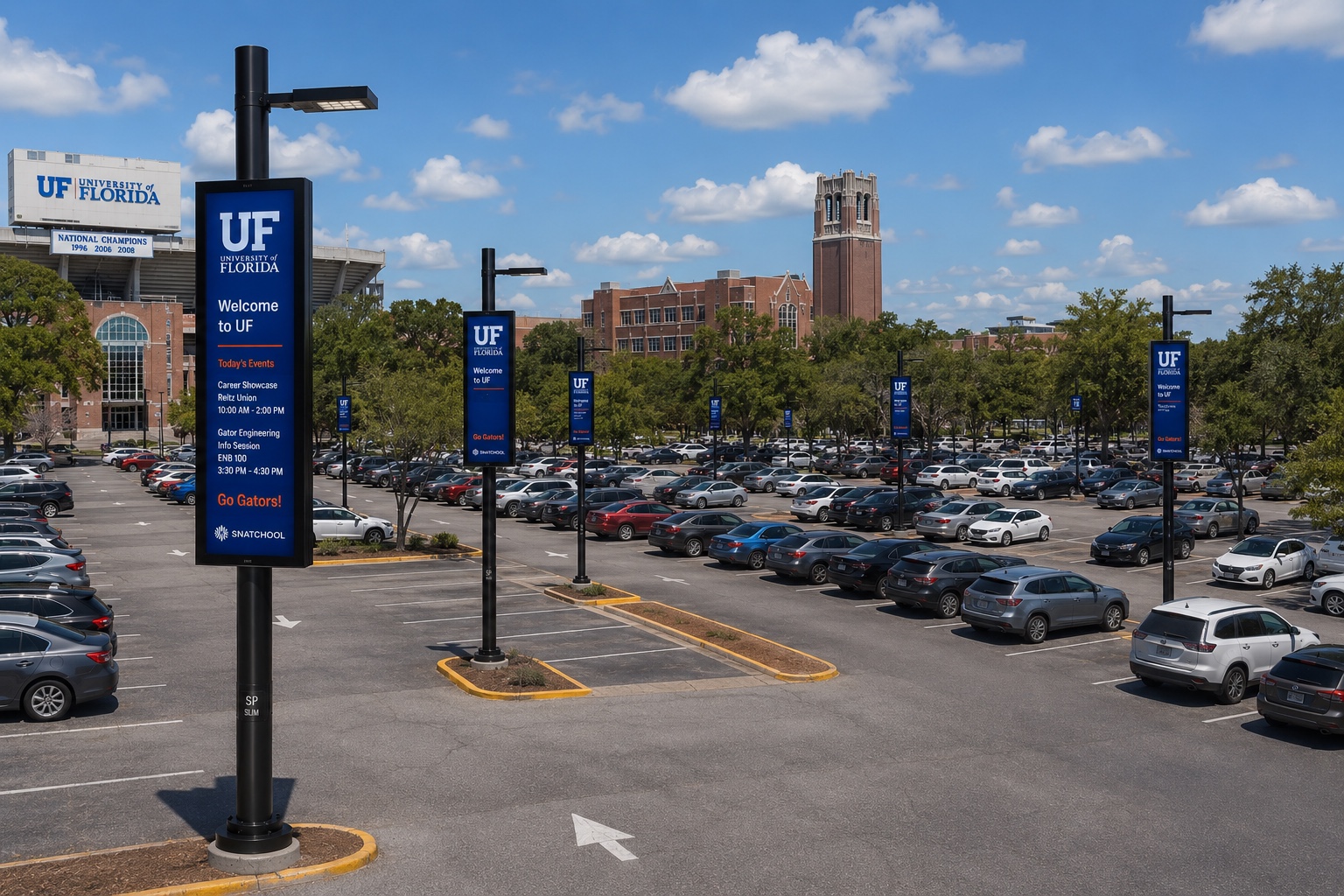
An outdoor emergency alert network is purpose-built infrastructure for delivering priority safety messages to people in the public realm. It complements sirens, apps, and broadcast — it doesn't replace them. This article walks through how an outdoor network is structured, what it integrates with, and where it belongs in a municipal communication stack.
What an outdoor emergency alert network is
An outdoor emergency alert network is a set of weather-rated, always-on, networked displays positioned at the threshold of public space, operated as a coordinated system with priority routing for safety content. Snatchool's implementation uses SP Slim™ pole-mounted units and Smart Palm™ landmark structures, all on one platform.
The defining characteristic isn't the hardware — it's the operating posture. The network is always observable, always ready to publish priority content, and always producing an audit record. That posture is what makes the difference between digital signs and public safety infrastructure.
What it integrates with
An outdoor emergency alert network is most useful when it slots into existing municipal workflows. The Snatchool platform supports IPAWS integration for federally originated alerts, severe weather feed integration for time-sensitive meteorological events, and AMBER/Silver alert workflows for missing-person notifications.
Integration is the difference between an alert network that's used and one that sits idle. Emergency managers won't adopt a tool that requires a separate workflow during an incident; the platform was designed around that constraint.
How priority routing actually behaves
When a priority alert is published, the platform overrides civic content and the managed advertising layer on the affected units. The override applies for the duration the safety content is active and clears when it expires or is manually released.
Geographic scope is enforced at publication time. A unit in the affected service area takes the override; units outside that area continue normal operation. That keeps the network credible — alerts appear where they're relevant and don't fatigue audiences elsewhere.
Verified origination
Priority content requires verified, role-authorized origination. Only users in the public safety role can publish overrides, authentication is enforced at the platform level, and every published message produces an audit record.
This is what makes the network operationally safe. The same infrastructure that carries civic content cannot be misused to publish unauthorized emergency messages, because the platform requires the right credentials for the right role.
Where an outdoor network fits in the stack
Sirens cover loud audio warnings for a narrow set of events. Apps cover detailed information for opted-in device holders. Broadcast covers extended context. An outdoor emergency alert network covers the public realm — pedestrians, transit riders, visitors, people in motion.
Each channel reaches a different audience. The outdoor network is the one that closes the gap most municipal alert stacks currently have: the people who aren't reached by any of the others at the moment an event develops.
- An outdoor emergency alert network is purpose-built infrastructure with a defined operating posture, not just digital signage.
- The Snatchool platform integrates with IPAWS, severe weather feeds, and AMBER/Silver alert workflows.
- Priority routing is enforced at the platform level and respects geographic scope.
- Verified, role-authorized origination prevents misuse and produces a complete audit record.
- The outdoor network closes the public-realm gap left by sirens, apps, and broadcast media.
Frequently Asked Questions
The Snatchool platform supports IPAWS, severe weather feeds, and AMBER/Silver alert workflows, plus manual publishing by authorized public safety roles.
Scope is enforced at publication time. Alerts appear on units in the affected service area; units outside that area continue normal operation.
Verified, role-based authorization. Only authenticated users in the public safety role can publish priority overrides, and every action produces an audit record.
Bernard M. Albury Jr. is the founder of Snatchool Innovations LLC and the architect behind the SP Slim™ and Smart Palm™ outdoor communication platforms. He developed the First Contact Community Awareness™ operating principle that governs every Snatchool deployment and the Municipal Digital Messaging™ framework that coordinates public safety, civic information, and managed advertising into a single outdoor channel.