Municipal networks are public communication assets. Managed advertising operates inside those networks under a governance framework defined by the municipality and enforced by the platform. For advertisers, this is what that actually looks like.
The governance framework
Each municipal network operates under category restrictions and editorial standards defined by the municipality. Those restrictions are enforced at the platform level — the network will not run creative that violates them. Typical restrictions exclude political, adult, and other categories that conflict with civic values.
The framework is what makes managed advertising compatible with the network's public-safety and civic role. It's also what gives advertisers a clear, predictable operating environment.
The buying model
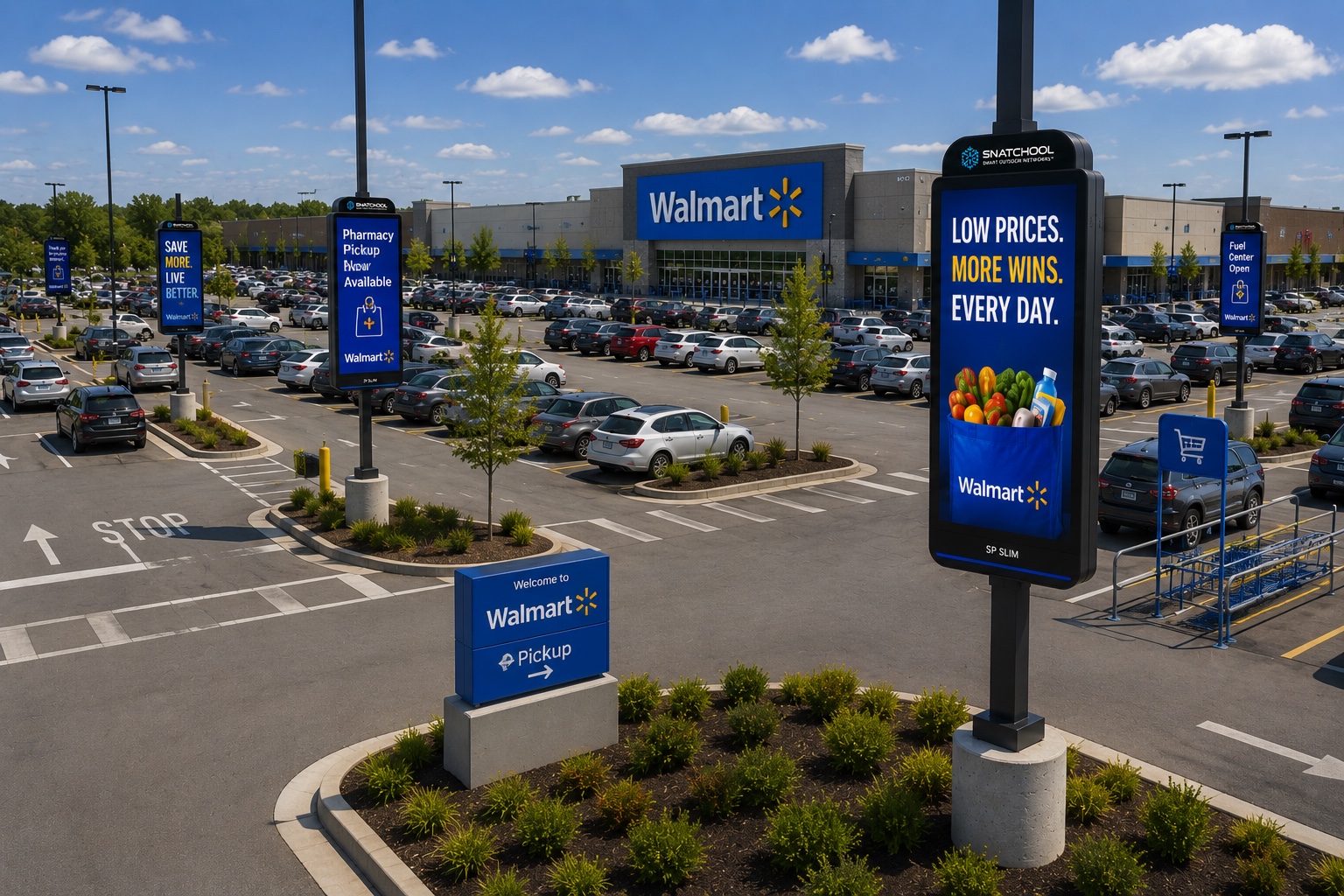
Advertisers engage Snatchool directly to run in defined territories on the network. Snatchool handles creative review, scheduling, and operations. Because the network is operated as a coordinated channel, the buying experience is simpler than assembling outdoor plans from multiple media owners.
What runs alongside
Managed advertising runs alongside the public safety and civic content layers on the same network. During an active safety event, priority routing yields advertising inventory to safety content on affected units — which is part of why the network earns audience trust in the first place.
For brands that value being adjacent to genuinely useful community content rather than the lowest-common-denominator inventory, the municipal network setting is structurally aligned.
Funding the public network
Managed advertising is how the network is funded. That model means brands participating in the managed advertising layer are also contributing to the operation of the community communication infrastructure their inventory runs on.
That's a real distinction from a billboard buy, where advertising revenue funds a private media operator. On a Snatchool municipal network, it funds the city's communication asset.
- Each municipal network operates under a governance framework defined by the municipality.
- Category restrictions are enforced at the platform level.
- Advertisers engage Snatchool directly; the buying experience is coordinated across the network.
- Managed advertising runs alongside public safety and civic content under priority routing.
- Advertising revenue funds the city's communication asset.
Frequently Asked Questions
The municipality operating each network defines the category restrictions and editorial standards. The Snatchool platform enforces them at the platform level.
Public safety alerts and civic information on the same network, under priority routing that yields advertising inventory to safety content during active events.
The buying model is consistent — territory-based, managed by Snatchool, governed by platform-enforced category restrictions — while the specific restrictions and editorial standards reflect the operating municipality.
Bernard M. Albury Jr. is the founder of Snatchool Innovations LLC and the architect behind the SP Slim™ and Smart Palm™ outdoor communication platforms. He developed the First Contact Community Awareness™ operating principle that governs every Snatchool deployment and the Municipal Digital Messaging™ framework that coordinates public safety, civic information, and managed advertising into a single outdoor channel.