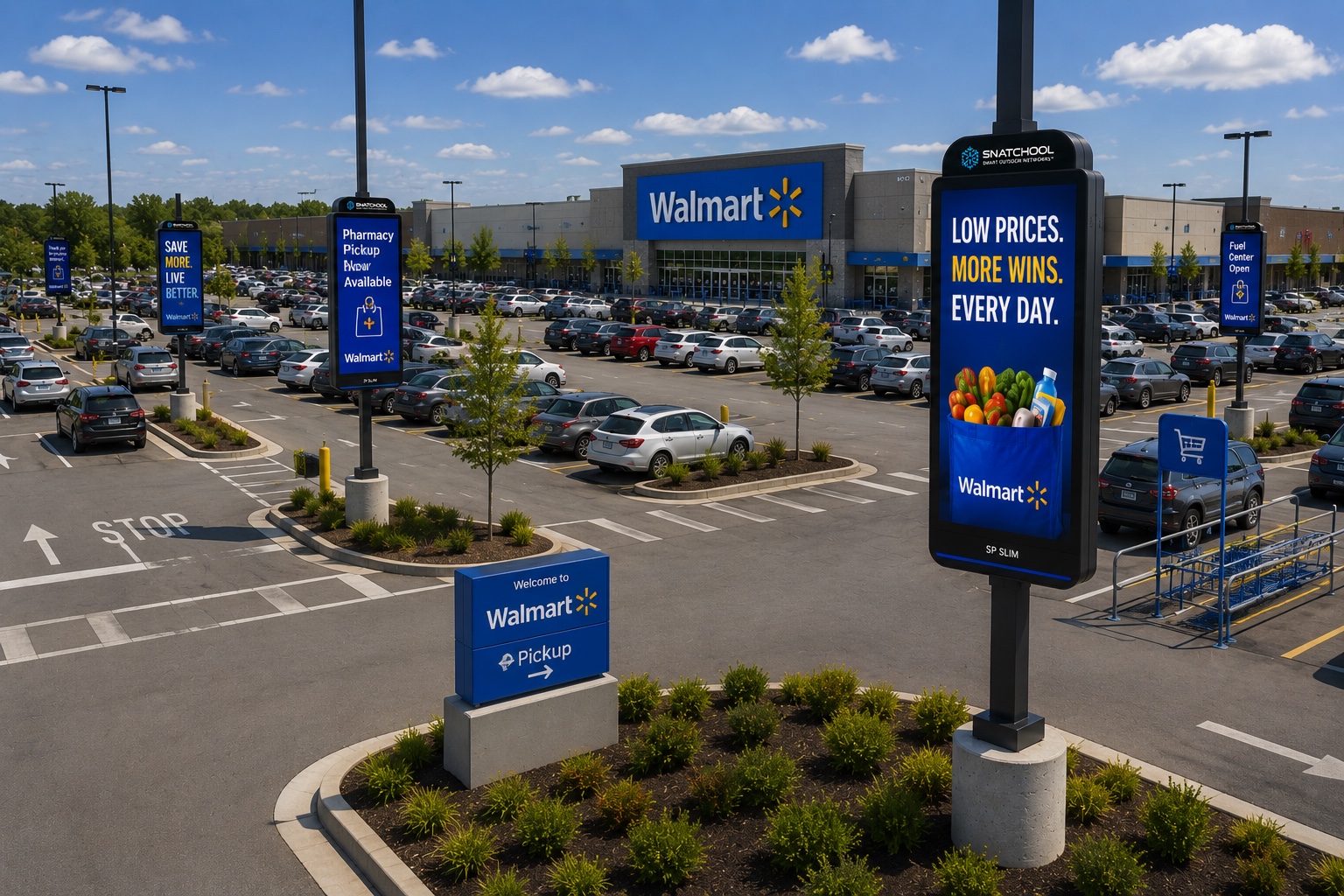
Brand safety on a civic network is structurally different from brand safety on a programmatic network or an open billboard inventory. The Snatchool platform enforces it operationally, not just contractually, and that distinction matters for advertisers evaluating the channel.
Category restrictions defined by the operator
Each network operator — municipality or hosting property — defines the category restrictions that apply to managed advertising on their network. Typical restrictions exclude political, adult, and other categories that conflict with the operator's civic or property posture.
Those restrictions are not advisory. They are configured into the platform and enforced at publication time, so creative outside the allowed categories simply does not run on the network.
Editorial templates that govern creative
The platform ships with templates that govern typography, color, and message density appropriate to outdoor viewing. Creative is reviewed for fit with those templates as part of onboarding.
The templates are what keep the network consistent across all three content layers — and what keep the managed advertising layer visually compatible with the civic and safety content it runs alongside.
Audit and governance
Every publication action on the network produces an audit record. Operators can review what ran, when, and where, which makes governance enforceable rather than merely declared.
For advertisers, that environment is the opposite of opaque programmatic inventory. The network is observable, accountable, and governed.
What it means for brands
Brand safety on a civic network is enforced by the operating model itself. Brands that run on the Snatchool network can be confident their creative will appear in an environment governed by the operating municipality or property — and alongside genuinely useful community content rather than adjacent to inventory they would rather avoid.
- Category restrictions are defined by the network operator and enforced at the platform level.
- Editorial templates govern creative for outdoor legibility and visual compatibility.
- Every publication action produces an audit record.
- Governance is operationally enforced, not merely declared.
- Brands run alongside civic and safety content on a network designed for the public realm.
Frequently Asked Questions
The operator of each network — the municipality or hosting property — defines the category restrictions. The Snatchool platform enforces them at publication time.
Yes. Creative is reviewed for fit with the editorial templates that keep the network legible at street scale and visually compatible across all three content layers.
Yes. Every publication action on the platform produces an audit record that operators can review.
Bernard M. Albury Jr. is the founder of Snatchool Innovations LLC and the architect behind the SP Slim™ and Smart Palm™ outdoor communication platforms. He developed the First Contact Community Awareness™ operating principle that governs every Snatchool deployment and the Municipal Digital Messaging™ framework that coordinates public safety, civic information, and managed advertising into a single outdoor channel.