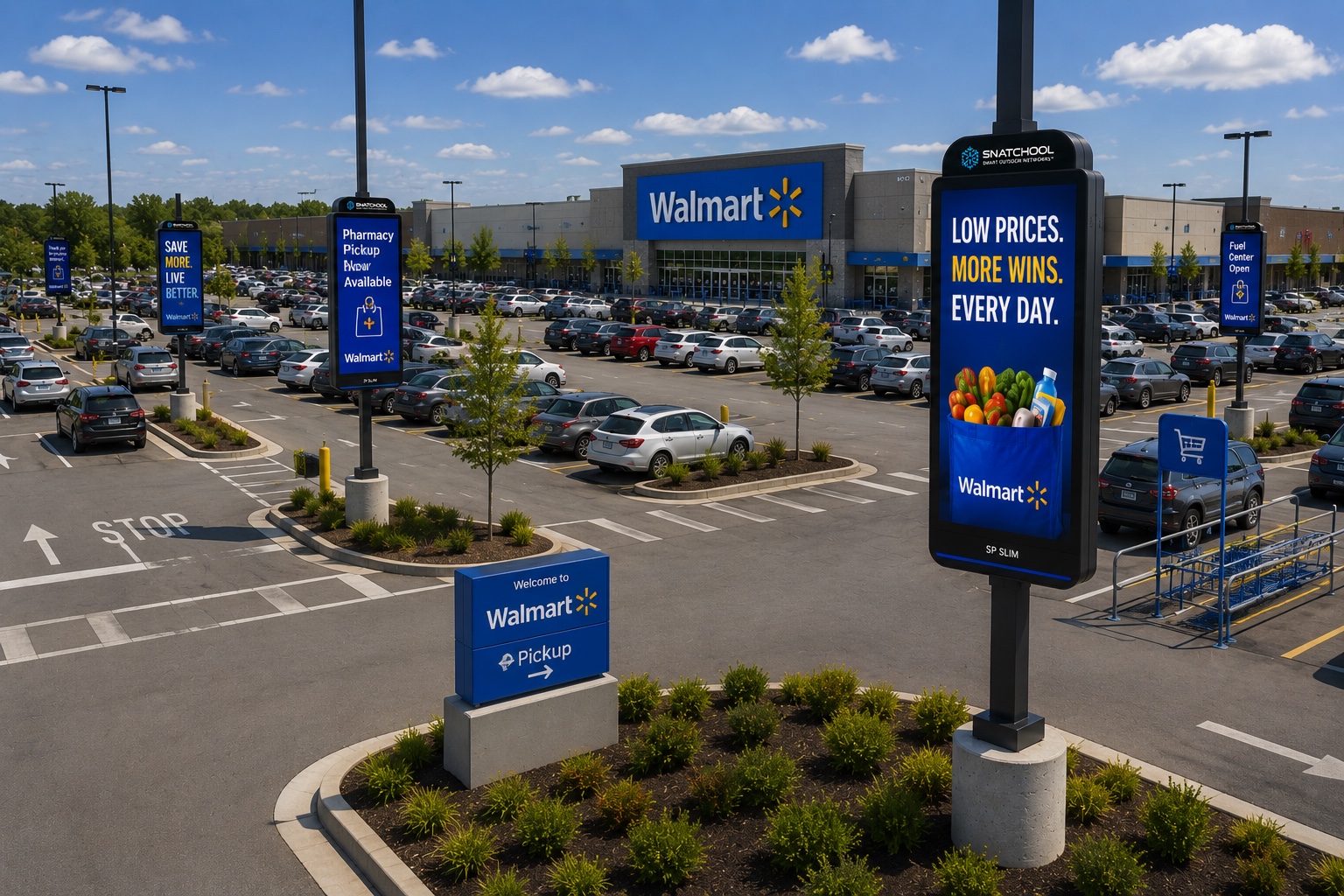
For an advertiser, the Snatchool network looks like outdoor digital infrastructure with a few structural differences that matter. Understanding those differences is the difference between buying it well and buying it like a billboard.
Communication-first networks behave differently
A communication-first network carries public safety, civic, and managed advertising content under priority routing. For advertisers, that has practical implications: during an active safety event, advertising inventory yields to safety content. That's a feature, not a bug — it's what makes the network trusted by residents and welcome on city infrastructure.
It also means the network has a credibility halo most pure advertising networks don't. The audience sees the channel as civic infrastructure, and that perception extends to the managed advertising layer.
Coordinated territories, not individual structures
Inventory is organized around territories. Brands run presence inside a defined geographic territory rather than negotiating individual structures one at a time. That simplifies planning, especially for regional brands and for local brands targeting specific corridors.
Editorial templates and creative review
Creative runs in formats designed for legible outdoor viewing at street scale. Snatchool reviews creative against the templates that keep the network consistent and brand-safe across all three content layers. That review is light when creative aligns with the templates, and direct when it doesn't.
The result is creative that performs in the environment, not creative that fights it.
Pedestrian-scale audience
The Snatchool network is built for the pedestrian environment — visible at walking distance, in parking and transit areas, on commercial corridors and civic plazas. That audience profile matches a wide range of brand objectives that highway-scale outdoor infrastructure can't address well.
- Communication-first networks yield to safety content under priority routing — and earn audience credibility in return.
- Inventory is organized by territory, not by individual structures.
- Editorial templates and creative review keep the network legible and brand-safe.
- The audience profile is pedestrian-scale, suited to a wide range of brand objectives.
- Advertisers engage Snatchool directly, without a third-party media owner in the path.
Frequently Asked Questions
Priority routing yields advertising inventory to safety content on affected units while the event is active. That's part of how the network earns the audience credibility advertisers benefit from.
The Snatchool model sells presence in defined territories rather than individual structures. That structure simplifies planning and aligns with how brands typically think about footprint.
Snatchool reviews creative against the platform templates that keep the network legible at street scale and consistent across all three content layers. Review is light when creative aligns with the templates.
Bernard M. Albury Jr. is the founder of Snatchool Innovations LLC and the architect behind the SP Slim™ and Smart Palm™ outdoor communication platforms. He developed the First Contact Community Awareness™ operating principle that governs every Snatchool deployment and the Municipal Digital Messaging™ framework that coordinates public safety, civic information, and managed advertising into a single outdoor channel.