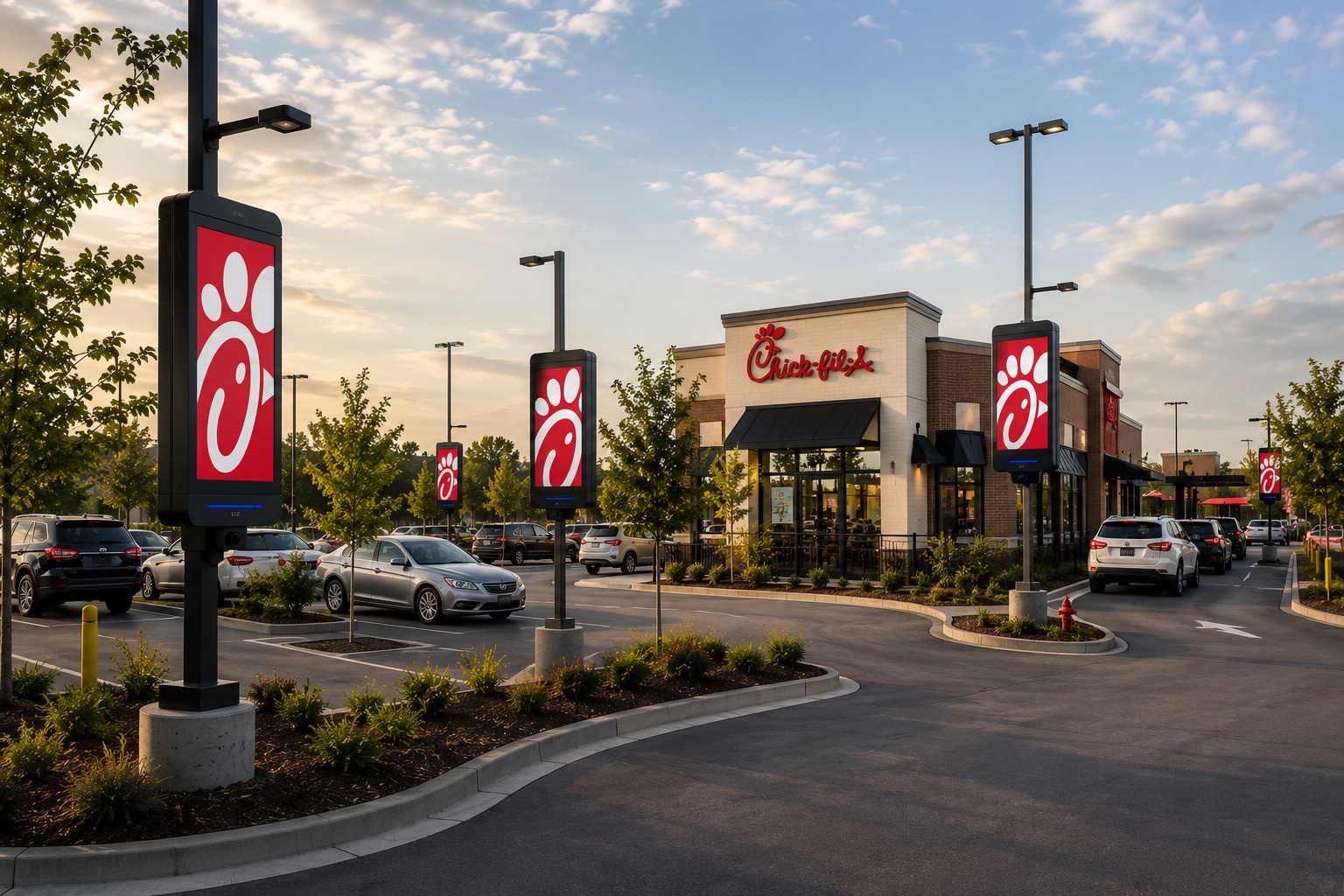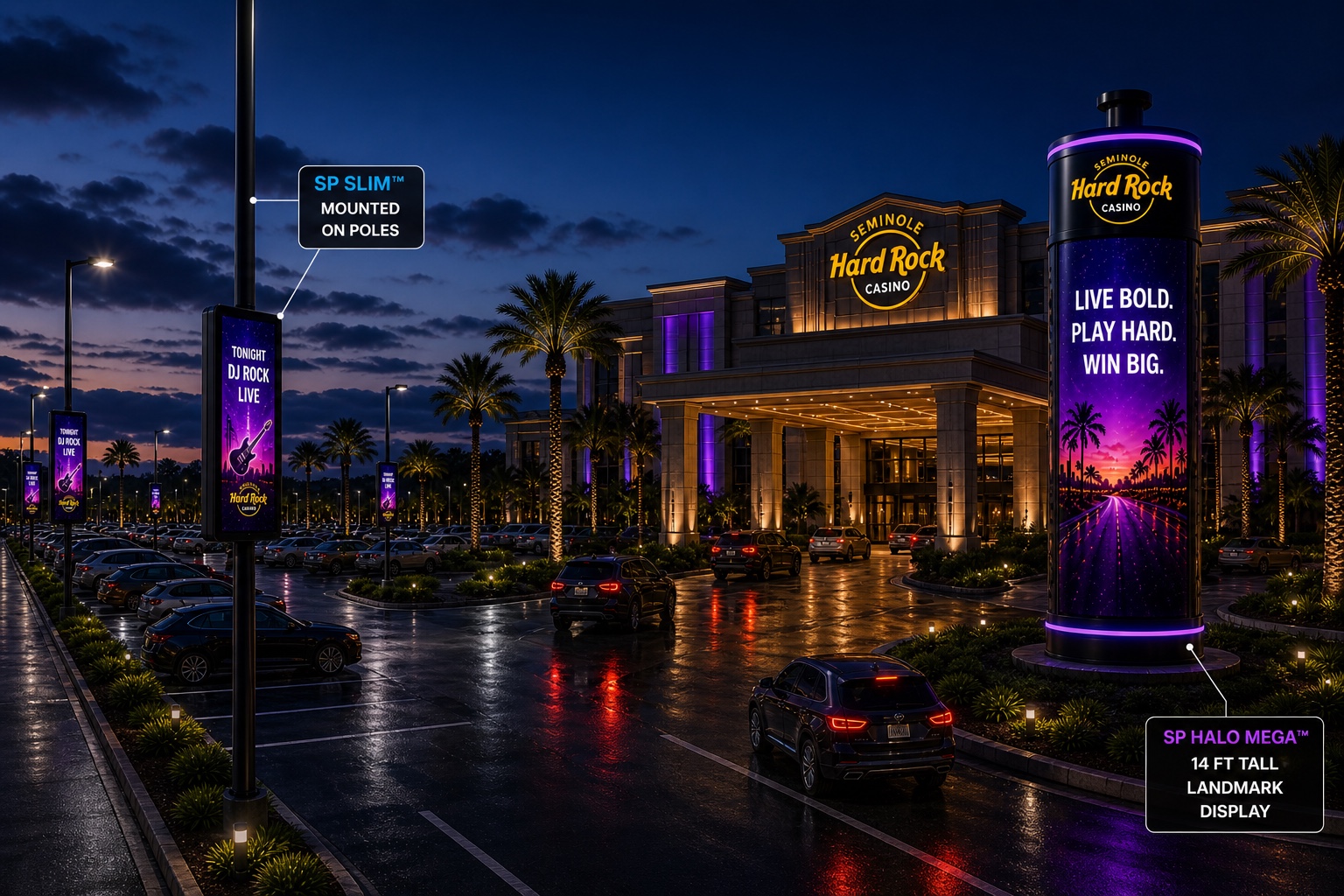
On private commercial property, Snatchool digital infrastructure operates the same way it does on city deployments — with the same hardware, the same platform, and the same content governance — adapted to the host environment. This is what hosting actually looks like on the ground.
What gets deployed
Most private-site deployments use SP Slim™ on existing pole infrastructure: parking lot poles, perimeter lighting, plaza edges, entrance corridors. Smart Palm™ may be deployed at flagship locations where a landmark format is warranted.
Snatchool delivers the system end to end — hardware, mounting, networking, platform configuration, and ongoing managed service — so the property owner is not asked to source or operate any of the components.
Where it goes on the property
Placement is informed by sightlines, pedestrian and vehicular patterns, existing pole condition, and the operational role the unit will play. Site review identifies the candidate locations that deliver the most communication value with the least impact on property operations.
The goal is for hosted units to feel like infrastructure that belongs to the property, not equipment imposed on it.
How it operates day to day
Hosted units run on the Snatchool platform with the same three content layers — public safety, civic, managed advertising — governed by the same editorial standards as the rest of the network. Snatchool handles operations; the property owner does not need to staff or train for it.
When relevant, property-specific civic content can run on hosted units. The platform's role-based authorization makes it possible to extend publishing access where appropriate, under the same governance framework.
What it changes about the property
Hosted digital infrastructure changes the communication posture of a property without changing its operational character. Tenants, visitors, and the surrounding community gain access to coordinated outdoor communication; the property owner gains a hosted asset and a revenue share program.
It also positions the property as a contributor to local community awareness — a measurable, visible role that supports the property's standing with its tenants and neighbors.
- Private-site deployments primarily use SP Slim™ on existing pole infrastructure; Smart Palm™ anchors flagship locations.
- Snatchool delivers the system end to end so the property owner is not asked to operate components.
- Hosted units run on the same platform and governance as the rest of the Snatchool network.
- Placement is informed by sightlines, patterns, and operational role.
- Hosting positions a property as a contributor to local community awareness.
Frequently Asked Questions
Primarily SP Slim™ pole-mounted displays on existing pole infrastructure. Smart Palm™ landmark structures are deployed at flagship locations where the format is warranted.
No. Snatchool delivers the system end to end — hardware, deployment, network operations, content operations, and ongoing managed service.
Yes. Where appropriate, the platform's role-based authorization can extend publishing access for property-specific civic content under the same governance framework.
Bernard M. Albury Jr. is the founder of Snatchool Innovations LLC and the architect behind the SP Slim™ and Smart Palm™ outdoor communication platforms. He developed the First Contact Community Awareness™ operating principle that governs every Snatchool deployment and the Municipal Digital Messaging™ framework that coordinates public safety, civic information, and managed advertising into a single outdoor channel.